Elegy for the Screenshot
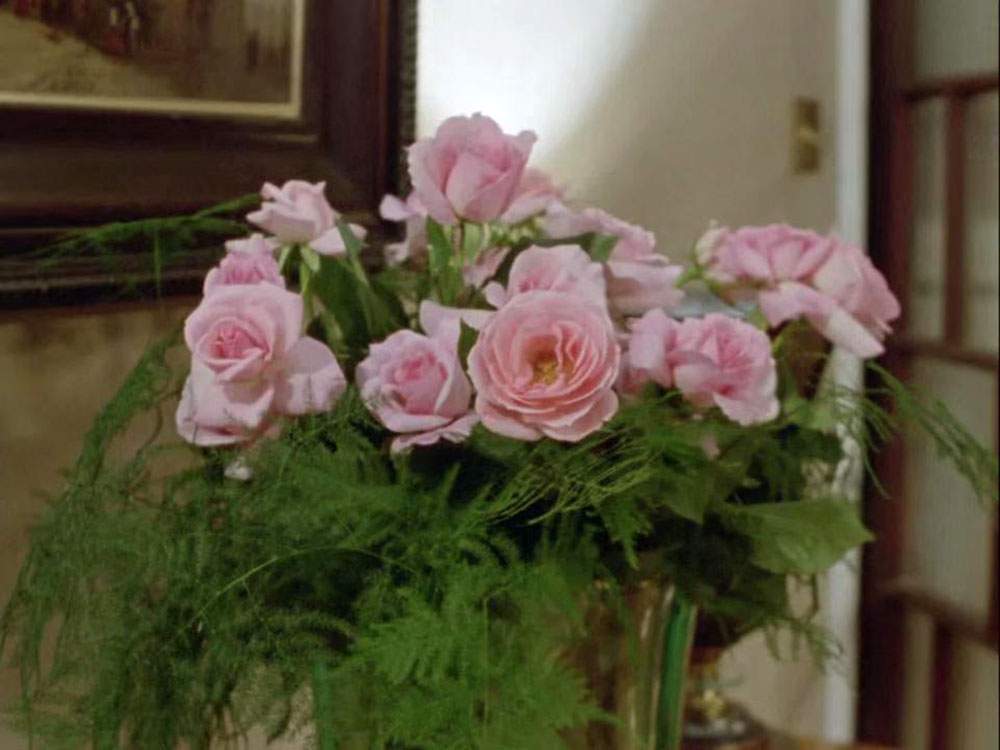
About five years ago, Catherine Pearson started taking screenshots of every bouquet featured on The Nanny (1993–1999), the six-season CBS sitcom that was then streaming on Netflix. She was just becoming a florist, and she found the arrangements—ornate, colorful, and distinctly tropical—inspirational. She now keeps them in a folder on her desktop, alongside screenshots of flower arrangements featured on Poirot (1989–2013), the British detective drama. A few months ago, however, Pearson suddenly found that when her fingers danced instinctively toward Command + Shift + 3, she was greeted by a black box where her flowers used to be, a censored version of what she had meant to capture.
It was around this time when streaming platforms like Netflix, HBO Max, Amazon Prime, and the Criterion Channel imposed a quiet embargo on the screenshot. At first, there were workarounds: users could continue to screenshot by using the browser Brave or by downloading extensions or third-party tools like Fireshot. But gradually, the digital-rights-management tech adapted and became more sophisticated. Today, it is nearly impossible to take a screenshot from the most popular streaming services, at least not on a Macintosh computer.
The shift occurred without remark or notice to subscribers, and there’s no clear explanation as to why or what spurred the change. When asked to comment for this article, HBO claimed never to have supported the taking of screenshots and denied there had been a recent shift, while Criterion declined to comment entirely. This obfuscation raises many questions. On the one hand, if we were never entitled to screenshot, why did we have tacit permission for so long? And what do the consequences of such a policy shift look like legally, culturally, and emotionally?
For PC users, this story takes a different, and happier, turn. With the use of Snipping Tool—a utility exclusive to Microsoft Windows, users are free to screen grab content from all streaming platforms. This seems like a pointed oversight, a choice on the part of streamers to exclude Mac users (though they make up a tiny fraction of the market) because of their assumed cultural class. This assumption isn’t unreasonable. Out of everyone interviewed for this article, only one of them was a PC user.
Ashley Blewer is a video systems developer and archivist who’s troubled by the repercussions of the embargo: “We should be encouraging related or derivative works instead of trying to prevent them, and I don't see how screenshots and discussion hinder the intellectual property of these platforms in any way.” In one of her blog posts from 2018, titled “Wild Wild Country and the Magnetic Media Crisis,” Blewer mines the documentary series (which was then streaming on Netflix) for “egregious” visual errors and then annotates them with technical insights. Screenshots are Blewer’s visual compass for this kind of writing and without them, her work may suffer. “What am I gonna do now,” she asks, “act like this is a crime-investigation court case and make illustrations?”
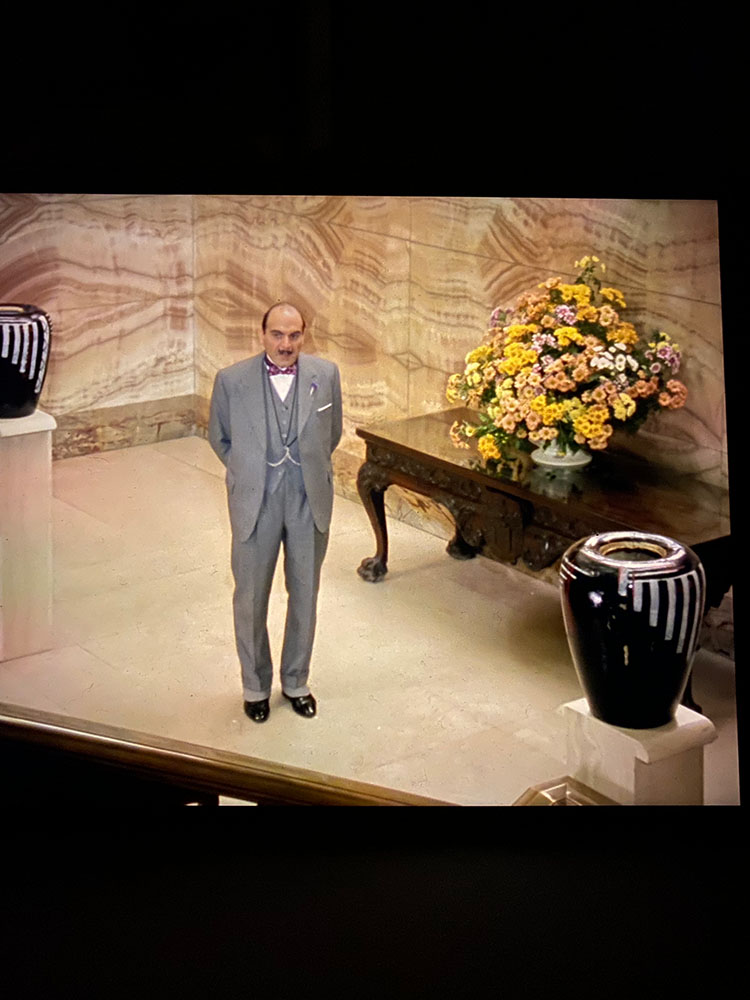
Screenshots (of anything, anywhere) are a useful tool in cataloging and archiving the cultural moment. They are a means of creating permanence in a fast-paced and increasingly digital world. To screenshot (be it a frame from a film, a paragraph of text, a blurred moment from a YouTube video) is to press pause, to capture, to remember. For Allie Avital, a filmmaker, image collecting has always been a pathway to creating and telling stories. Her screenshot folders are organized for different aspects of her life and work—some by technique (framing, lighting) and others by theme or title (1980s Soviet children films are a favorite of hers. Many of them she classifies as “dream images” or bridges to writing). “They get me excited about future possibilities,” she says.
Isabel McWhorter-Rosen, a branding consultant and writer, recognizes the value of the screenshot from a marketing perspective: “This seems like such a huge oversight, and I cannot understand why these companies wouldn’t be so excited by the fact that people want to screengrab content on their platform and share it for free,” McWhorter-Rosen says. “Not to mention the fact that social media is one of the most effective marketing tools for these platforms who are suffering, by the way.”
In Hito Steryl’s “In Defense of the Poor Image,” the author talks about the “poor image” (or the popular image) as a democratic touchstone. These are the images that are and should be distributed, again and again, “liberated from the vaults of cinemas and archives and thrust into digital uncertainty.” While Steryl might not be thinking of the importance of archiving, say, all of Carrie Bradshaw’s outfits on Sex and City, she underlines the transformative quality of the screenshot as we understand it, as an object that converts “quality into accessibility, exhibition value into cult value, films into clips, contemplation into distraction.”
“There’s beauty in a shitty jpeg that can be saved again and again, continually losing its resolution as a decaying image,” says Linnéa Gad, an artist whose painting series Screenshot-Model-Landschap (2013–2019) traces screenshots from To New Horizons, a Ford General Motors film that was used to showcase its “Futurama” exhibit at the 1939 World’s Fair. Gad found the film on YouTube, a platform where screenshots are still permitted, and liked the grainy desaturation of the images she captured. The quality of the film reminded her of a fading fresco from some utopian empire: “Ruins and frescoes are important to me. They depict times and civilizations which are partly hidden, mysterious and fragmented.” A few weeks ago, Gad revisited the screenshot for a new project. This time, she was attempting to capture specific frames from Ingmar Bergman’s Through a Glass Darkly (1961) on Criterion to present as research for a publication, when she was confronted by the forbidding black square. As a temporary solution, she’s resorted to taking photos of her laptop on her phone while she awaits access to the Bergman Foundation archive.
Read full story here.