How to Build a House for Leonard Bernstein
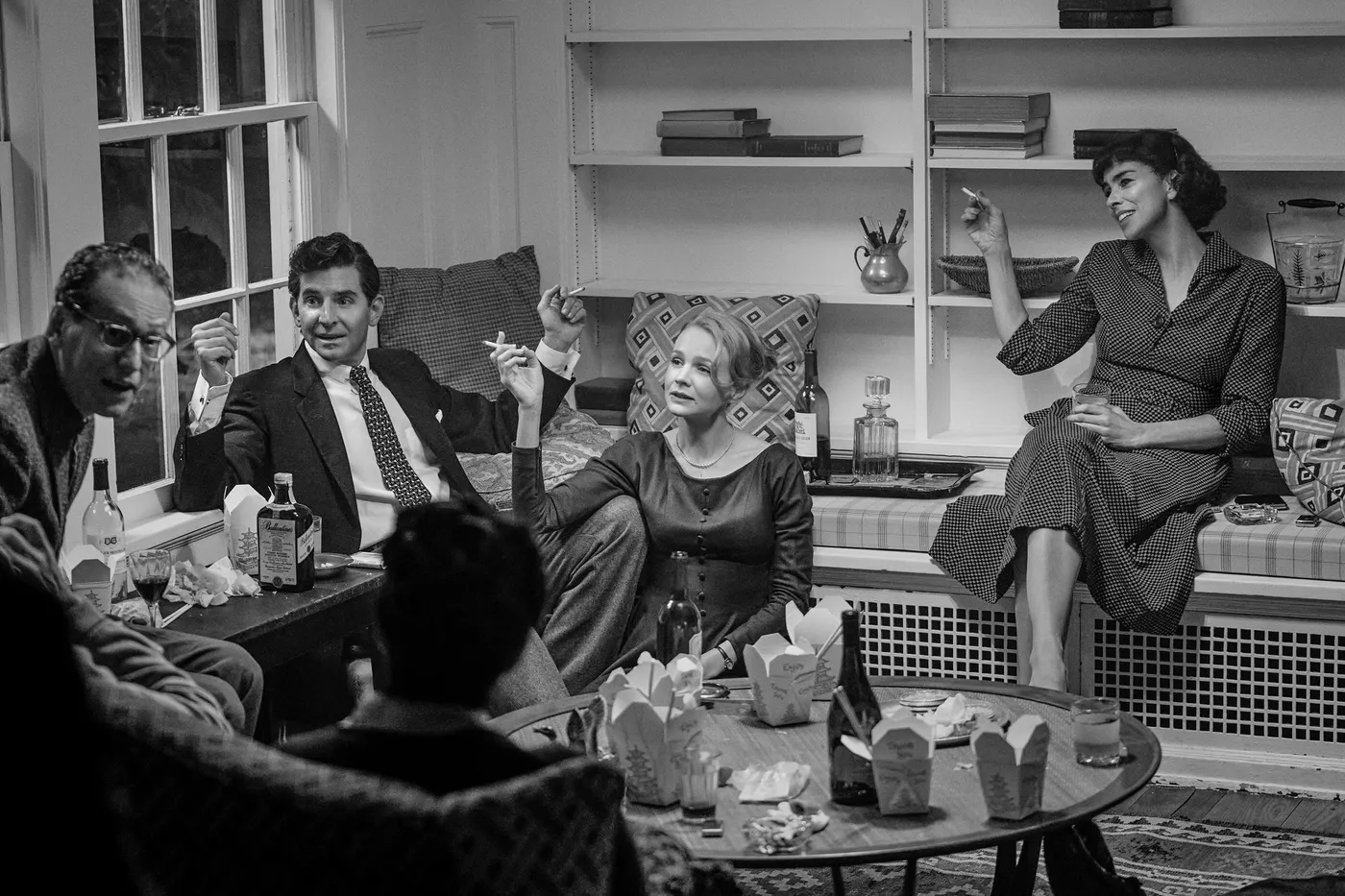
If home is a feeling, production designer Kevin Thompson has built a career out of manufacturing that feeling. For Hagai Levi’s Scenes From a Marriage, the series adapted from Ingar Bergmann’s 1973 miniseries, Thompson created what appeared to be a perfectly appointed three-story home in Boston on a New York soundstage — each room reflecting a different dimension of the characters’ deteriorating relationship. In Alejandro Gonzalez Iñárritu’s Birdman, it was the claustrophobic and maze-like theater where the characters are trapped that won him the Art Directors Guild Award for production design. For Bradley Cooper’s Maestro, the home in question was a stately, sprawling colonial in Fairfield, Connecticut.
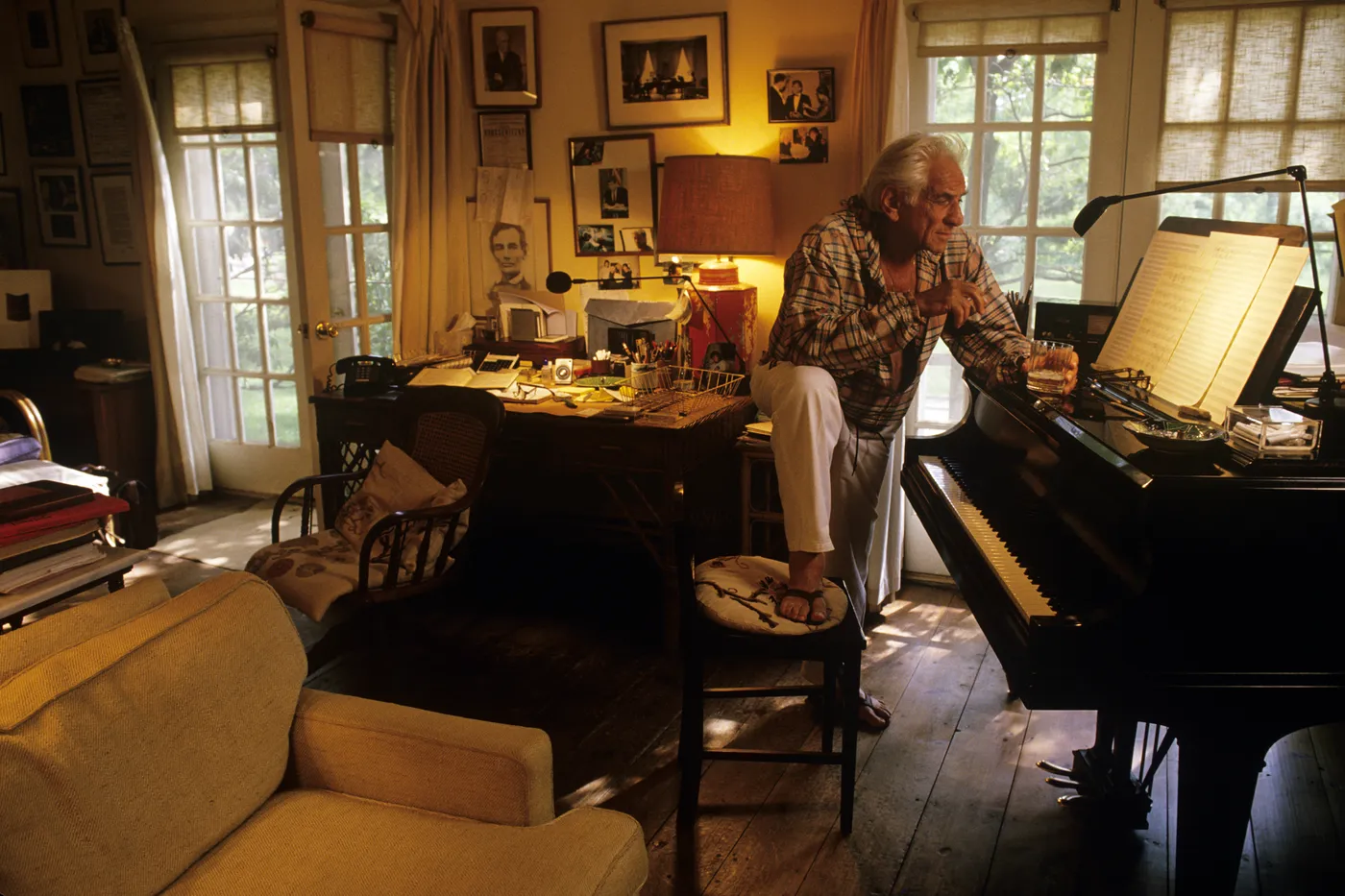
While the other homes in the film — the Bernsteins’ apartments in the Dakota and the Osborne, Leonard’s loft above Carnegie Hall — were meticulously built from the ground up, Thompson never really considered re-creating the Fairfield house that Leonard Bernstein and Felicia Montealegre purchased in 1962. It’s the home where Bernstein composed 28 years’ worth of work, where the family spent nearly every Thanksgiving and Passover, and where two of their three children still spend summers. “We really pushed to go there,” Thompson says of filming at the house. The choice was more expensive, but the intimacy of the space unlocked something essential about the family. “It was the most informative piece of the puzzle in terms of giving us details of their relationship and how they lived,” Thompson says. “I mean, I was able to look through all their junk drawers.”
Ahead of the Oscars, I talked to Thompson about what it was like to design in and around Bernstein’s real Fairfield home, getting to know the ghosts of Leonard and Felicia (down to the material of their bathrobes), and the thrill of stumbling upon long-forgotten artifacts and objects in the barn.
What was the house like before you’d gotten there?
I think because the kids are in the business of Leonard Bernstein, they’ve left the house pretty authentic to what it was when they were children living there. Felicia decorated the house and sourced most of the decoration from flea markets in the area.
It sounds like such an intimate process.
I mean, I was able to look through all their junk drawers, which informed a lot for the other set pieces.
Tell me more about these junk drawers.
Oh, yeah. Lots of junk drawers and those things you would hang on the wall in the kitchen from the ’70s — you’d stuff notes in them, and keys, and crayons, and Scotch tape. We were finding lots of old bills from the gas-delivery service.
I think it was finding dozens of Felicia’s paintings in the barn. Felicia was a failed painter. When they met, she was more famous than Leonard, but then his power eclipsed her creativity at times. They wanted to have a family, she had to sacrifice a certain amount for him to travel, so she would try and find other creative outlets. She loved to paint, though she never considered herself very good. So I was able to uncover all of these paintings that she did when they were traveling in Europe, or spending time in the country.
What were they like?
Mostly still-life and figurative paintings. She painted her kids a lot. It was really interesting to think about when she painted them, and where they would serve the house and the film best. We hung them in the rooms that felt appropriate in terms of time period and emotional context. We also found art objects and paintings made by their community of artistic friends and got to weave those in as well.
How did the house change?
I strategized with my art team about how we would make changes, which were mostly in set decoration, not construction. Nothing changed too dramatically. We’d refresh lampshades. And then we made it feel more vibrant by moving artwork around and adding in color. Me and my set decorator would look around and think, Let’s replace that, but keep that arrangement, and let’s keep the piano where it is but slide it this way for camera. We had to get rid of a lot of the technology — all the TVs, and the music equipment and the alarm systems. We replaced light switches too, things like that. Because they did update it to make it comfortable for them in today’s world.
We filled in because it felt a little … I don’t know how to say this politely, but it felt a little worn in. We moved furniture around. We recovered some of the furniture that had been faded. One specific couch — where Felicia, Tommy, and the kids are sitting and playing a game — was recovered in a maroon fabric that matched the original. We sourced a lot from used-furniture shops in Connecticut, because we figured that’s what Felicia would have done.
Read the full story here.